all pretence of colour
“After a while the coat of clean white paint on the Jeffrey Curtain house made a definite compromise with the suns of many Julys and showed its good faith by turning grey. It scaled—huge peelings of very brittle old paint leaned over backward like aged men practising grotesque gymnastics and finally dropped to a mouldy death in the overgrown grass beneath. The paint on the front pillars became streaky; the white ball was knocked off the left-hand door-post; the green blinds darkened, then lost all pretence of colour.”
—F. Scott Fitzgerald, The Lees of Happiness, from Tales of the Jazz Age, 1922.
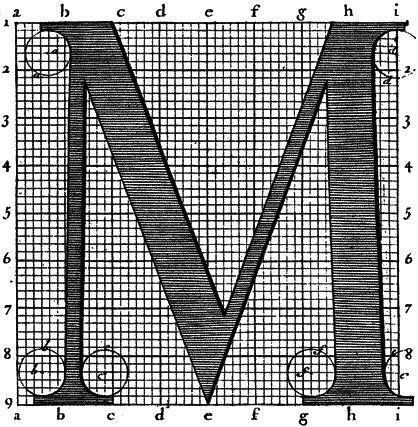
the Romain du Roi
‘What a car!’
“‘Gosh! What a car!’ This ejaculation was provoked by its interior. John saw that the upholstery consisted of a thousand minute and exquisite tapestries of silk, woven with jewels and embroideries, and set upon a background of cloth of gold. The two armchair seats in which the boys luxuriated were covered with stuff that resembled duvetyn, bus seemed woven in numberless colours of the end of ostrich feathers.
‘What a car!’ cried John again, in amazement.”
—F. Scott Fitzgerald, The Diamond as Big as the Ritz, from Tales of the Jazz Age, 1922.
the ultimate prison
“There was a room where the solid, soft gold of the walls yielded to the pressure of his hand, and a room that was like a platonic conception of the ultimate prison—ceiling, floor, and all, it was lined with an unbroken mass of diamonds, diamonds of every size and shape, until, lit with tall violet lamps in the corners, it dazzled the eyes with a whiteness that could be compared only with itself, beyond human wish or dream.
Through a maze of these rooms the two boys wandered. Sometimes the floor under their feet would flame in brilliant patterns from lighting below, patterns of barbaric clashing colours, of pastel delicacy, of sheer whiteness, or of subtle and intricate mosaic, surely from some mosque on the Adriatic Sea. Sometimes beneath layers of thick crystal he would see blue or green water swirling, inhabited by vivid fish and growths of rainbow foliage. Then they would be treading on furs of every texture and colour or along corridors of palest ivory, unbroken as though carved complete from the gigantic tusks or dinosaurs extinct before the age of man. . . .”
—F. Scott Fitzgerald, The Diamond as Big as the Ritz, from Tales of the Jazz Age, 1922. The ellipses are his.
a cut-glass age
“There was a rough stone age and a smooth stone age and a bronze age, and many years afterward a cut-glass age. In the cut-glass age, when young ladies had persuaded young men with long, curly moustaches to marry them, they sat down several months afterwards and wrote thank-you notes for all sorts of cut-glass presents—punch-bowls, finger-bowls, dinner-glasses, wine-glasses, ice-cream dishes, bonbon dishes, decanters, and cases—for, though cut glass was nothing new in the nineties, it was then especially busy reflecting the dazzling light of fashion from the Back Bay to the fastnesses of the Middle West.”
—F. Scott Fitzgerald, The Cut-Glass Bowl, from Flappers and Philosophers, 1920.
singing the Colombian national anthem
“You never know how many kinds of music there are in the world until you move to New York and start taking cabs. It’s like, from your apartment to Trader Vic’s you get Cuban music, and then from Trader Vic’s to Canal Bar you’ve got Zorba the Greek music and then Indian ragas from Canal Bar to Nell’s, Scandinavian heavy metal on the way from Nell’s up to Emile’s apartment. After that you start singing the Colombian national anthem.”
—Jay McInerney, Story of My Life, 1988.
Seadragon and Photosynth
digital publishing
“Five hundred years ago, when books were first introduced, they were greeted with the same level of skepticism that digital reading is facing today. Gutenberg’s bibles, as much as we revere them now, were not welcomed with open arms or eager hands.
‘Medieval clerics greeted printed books as imposters of illuminated manuscripts—aesthetically inferior, textually unreliable and likely to breed a dangerous diversity of opinion,’ wrote Jacob Weisberg in The New York Times in 2000. ‘The echo of such views is heard today in an equally misguided elite’s hostility toward digital publishing.’”
—Jeff Gomez, Print is Dead; Books in Our Digital Age, 2008.
words
“In the end, we may be in love with books, but it’s words that have truly won our hearts. It’s words that whisper into our ear and transform us, that make us believe in other worlds or new emotions we didn’t know existed; it’s words that keep us company in . . . planes, on subway trains, or our comfy couches. It is words, not books, paper, papyrus of vellum pages that transform our lives.”
—Jeff Gomez, Print is Dead; Books in Our Digital Age, 2008.
in a digital setting
“When William Faulkner finished As I Lay Dying in 1929, he wanted each of the characters to be represented by a different color ink. But the publisher balked, declaring it too expensive. Today, what Faulkner wanted could be easily accomplished in a digital setting.”
—Jeff Gomez, Print is Dead; Books in Our Digital Age, 2008.