‘How like Monet!’
“When music reminded me of something which was not music, I supposed it was getting me somewhere. ‘How like Monet!’ I thought when listening to Debussy, and ‘How like Debussy!’ when looking at Monet. I translated sounds into colours, saw the piccolo as apple-green, and the trumpets as scarlet.”
—E.M. Forster, Not Listening to Music, from Two Cheers for Democracy, 1939.
the conventional colouring of life
“The clock ticked, the coals blazed higher, and contended with the white radiance that poured in through the windows. Unnoticed, the sun occupied his sky, and the shadows of the tree stems, extraordinarily solid, fell like trenches of purple across the frosted lawn. It was a glorious winter morning. Evie’s fox terrier, who had passed for white, was only a dirty grey dog now, so intense was the purity that surrounded him. He was discredited, but the blackbirds that he was chasing glowed with Arabian darkness, for all the conventional colouring of life had been altered. Inside, the clock struck ten with a rich and confident note.”
—E.M. Forster, Howards End, 1910.
a tract of quivering grey
“Certainly London fascinates. One visualizes it as a tract of quivering grey, intelligent without purpose, and excitable without love; as a spirit that has altered before it can be chronicled; as a heart that certainly beats, but with no pulsation of humanity.”
—E.M. Forster, Howards End, 1910.
but London was not afraid
“London was beginning to illuminate herself against the night. Electric lights sizzled and jagged in the main thoroughfares, gas-lamps in the side streets glimmered a canary gold or green. The sky was a crimson battlefield of spring, but London was not afraid. Her smoke mitigated the splendour, and the clouds down Oxford Street were a delicately painted ceiling, which adorned while it did not distract.”
—E.M. Forster, Howards End, 1910.
Oxford empty
“He made no friends. His Oxford remained Oxford empty, and he took into life with him, not the memory of a radiance, but the memory of a color scheme.”
—E.M. Forster, Howards End, 1910.
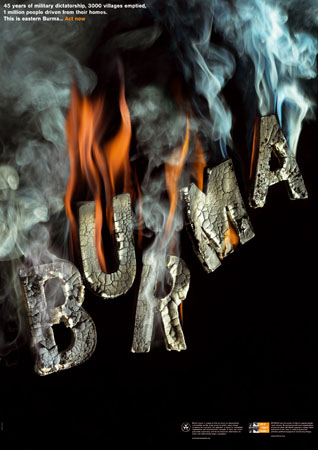
This brilliant poster
a long pause
“[T]here was a long pause—a pause that was somehow akin to the flicker of the fire, the quiver of the reading-lamp upon their hands, the white blur from the window; a pause of shifting and eternal shadows.”
—E.M. Forster, Howards End, 1910.
do not use semicolons
“If you really want to hurt your parents, and you don’t have the nerve to be a homosexual, the least you can do is go into the arts. But do not use semicolons. They are transvestite hermaphrodites, standing for absolutely nothing. All they do is show you’ve been to college.”
—Kurt Vonnegut, at the University of Wisconsin in Madison, September 22, 2003.
Woody Allen and Windsor Elongated

the green noodle
“[A]t Barzino’s the patron is led to expect white fettuccine and gets it. Here at Fabrizio’s he gets green fettuccine. Why? It all seems so gratuitous. As customers, we are not prepared for the change. Hence, the green noodle does not amuse us. It’s disconcerting in a way unintended by the chef.”
—Woody Allen, Fabrizio’s: Criticism and Response, from The Insanity Defense; The Complete Prose, 2007.