a coat of many colors
“‘I was doing very well till you came along. I had myrrh and fig trees in abundance and a coat of many colors with two pairs of pants of many colors. Now look.’”
—Job, complaining to God; Woody Allen, The Scrolls, from The Insanity Defense; The Complete Prose, 2007.
A fine example of a demonstration
“A fine example of a demonstration was the Boston Tea Party, where outraged Americans disguised as Indians dumped British tea into the harbor. Later, Indians disguised as outraged Americans dumped actual British into the harbor. Following that, the British, disguised as tea, dumped each other into the harbor. Finally, German mercenaries clad only in costumes from The Trojan Women leapt into the harbor for no apparent reason.”
—Woody Allen, A Brief, Yet Helpful, Guide to Civil Disobedience, from The Insanity Defense; The Complete Prose, 2007.
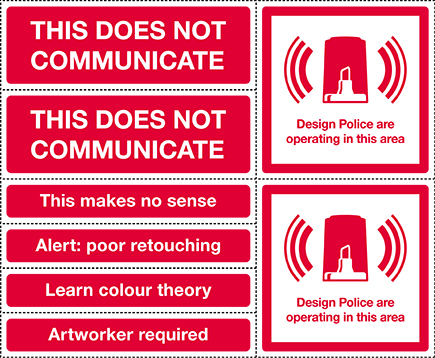
Artworker required
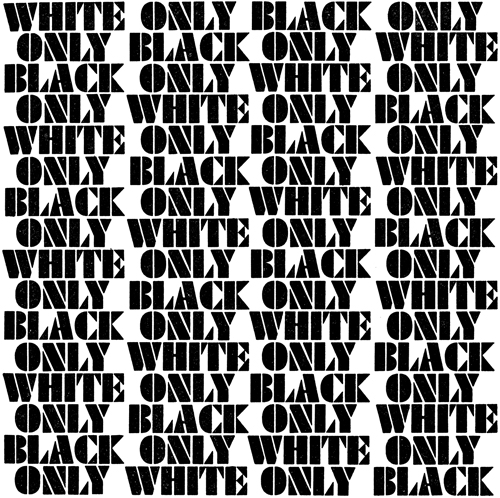
A Mnemonic Wallpaper Pattern for Southern Two-Seaters
W.
“Should I marry W.? Not if she won’t tell me other letters in her name.”
—Woody Allen, Selections from the Allen Notebooks, from The Insanity Defense; The Complete Prose, 2007.
the fake ink blot
“[I]n 1921, a group of biologists meeting in Hong Kong to buy suits discovered the fake ink blot. It had long been a staple of the Oriental repertoire of diversions, and several of the later dynasties retained power by their brilliant manipulation of what appeared to be a spilled bottle and an ugly ink stain, but was in reality a tin blot.
The first ink blots, it was learned, were crude, constructed to eleven feet in diameter, and fooled nobody.
However, with the discovery of the concept of smaller sizes by a Swiss physicist, who proved that an object of a particular size could be reduced in size simply by ‘making it smaller,’ the fake ink blot came into its own.”
—Woody Allen, The Discovery and Use of the Fake Ink Blot, from The Insanity Defense; The Complete Prose, 2007.
through the red grass
“The red of the grass made all the great prairie the color of wine-stains, or of certain seaweeds when they are first washed up. . . .
I wanted to walk straight on through the red grass and over the edge of the world, which could not be very far away. The light air about me told me that the world ended here: only the ground and sun and sky were left, and if one went a little farther there would be only sun and sky, and one would float off into them, like the tawny hawks which sailed over our heads making slow shadows on the grass.”
—Willa Cather, My Antonia, 1920.
red gold
“All those fall afternoons were the same, but I never got used to them. As far as we could see, the miles of copper-red grass were drenched in sunlight that was stronger and fiercer than at any other time of the day. The blond cornfields were red gold, the haystacks turned rosy and threw long shadows. The whole prairie was like the bush that burned with fire and was not consumed.”
—Willa Cather, My Antonia, 1920.
pink and red
“Due to a quirk in the English language, pink and red are sometimes considered two different colors, when in reality red is just a more saturated pink. They are both the same hue. The word ‘pink’ in fact did not enter the English language until the eighteenth century. The color is named after the flower (not the other way around), a relative of the carnation. . . . The color we call pink was previously referred to (if at all) as ‘rose.’”
—Diane Morgan, Fire and Blood; Rubies in Myth, Magic, and History, 2008.
a crystal cage
“The magic of any gem is dependent upon the magic of the light that gives it life and fire. Gems are complex things and handle light in complex ways. Light doesn’t just uneventfully flow through windows as it does through glass, or simple bounce back as from a black-hearted mirror. Instead it dances impatiently, refracts and reflects. It comes alive along with the gem. In a weird way, a gem is a crystal cage that traps the light and makes it fight to escape.”
—Diane Morgan, Fire and Blood; Rubies in Myth, Magic, and History, 2008.